Things I'm finding: photos, books, films, data, and other artifacts of working life.
Archive · 1910s
In the Taylorist office, the girls arrived dancing
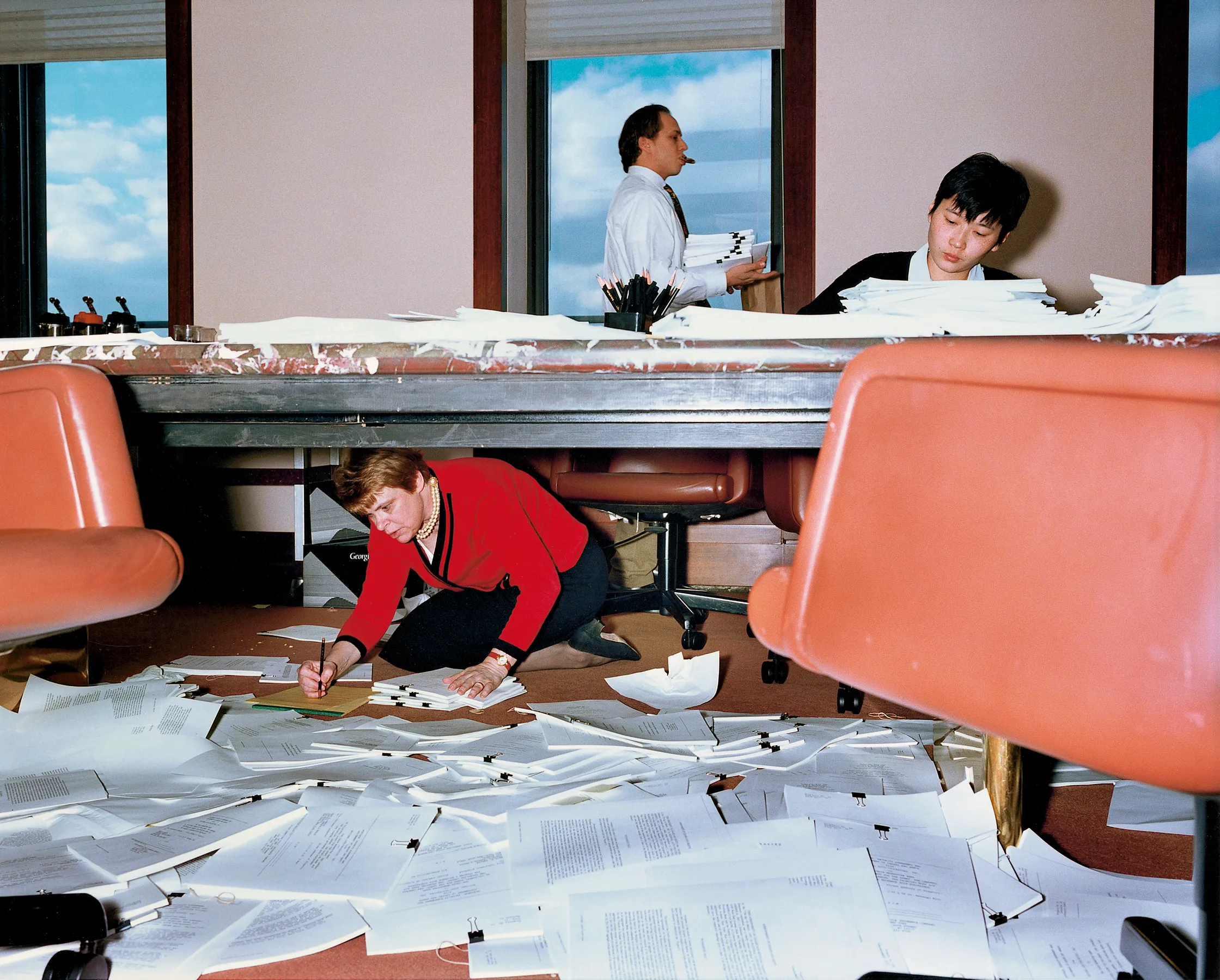
In the Taylorist office, workers' welfare was encouraged and the girls arrived dancing: "Rest rooms for girls and lunch rooms are also an advantage and are comparatively inexpensive. A phonograph in the lunch room at the noon hour will enable the girls to dance and enjoy themselves. The men employees highly appreciate a room where they can smoke during working hours or recess."
In the Taylorist office, workers' welfare was encouraged and the girls arrived dancing:
"Rest rooms for girls and lunch rooms are also an advantage and are comparatively inexpensive. A phonograph in the lunch room at the noon hour will enable the girls to dance and enjoy themselves. The men employees highly appreciate a room where they can smoke during working hours or recess."
·
Lars Tunbjork's Office
Archive · 1900s
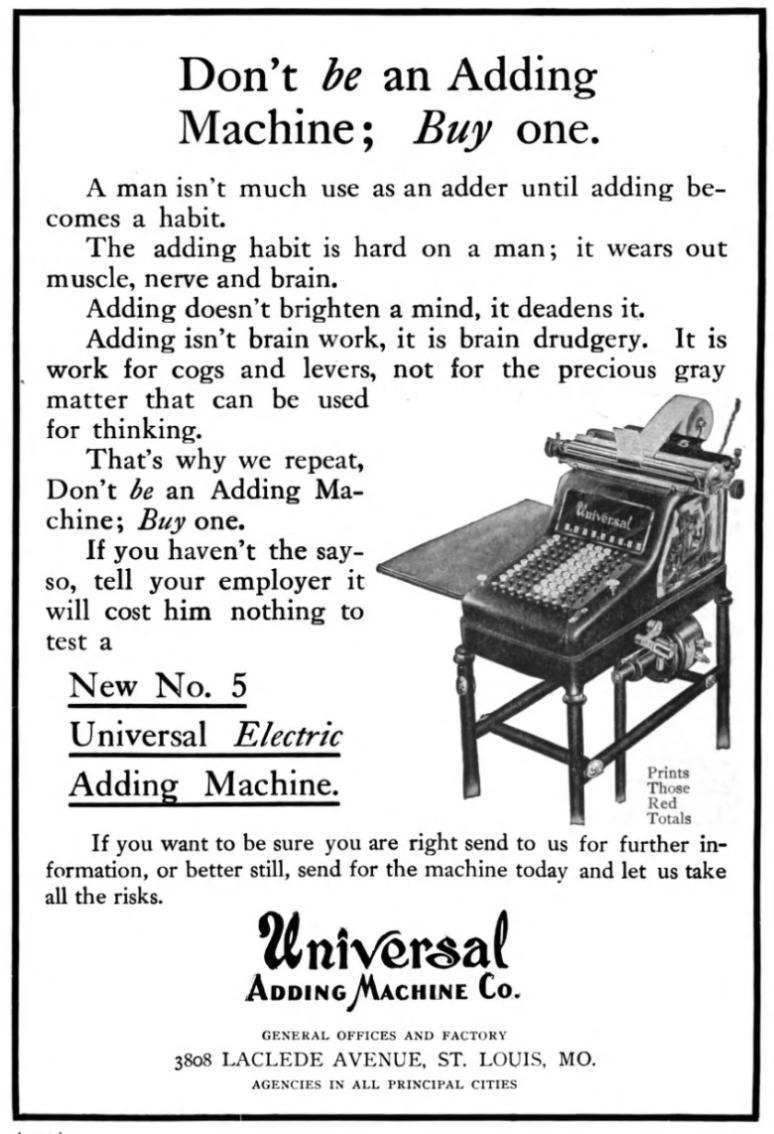
Don't be an Adding Machine
"Adding is brain drudgery, work for cogs and levers, not for the precious gray matter that can be used for thinking." Almost word for word how AI is sold now.
"Adding is brain drudgery, work for cogs and levers, not for the precious gray matter that can be used for thinking." Almost word for word how AI is sold now.
Book · 1911
Motion Study
Doing the same repetitive motion all day causes people to lose the ability to think critically and engage in the bigger picture. It feels strange when work doesn't feel like their own. Yet they themselves, along with their values, health, and so on, are just parts of the design. > "Every element that makes up or affects the amount of work that the worker is able to turn out must be considered separately." Gilbreth groups the variables into three. Variables of the worker - Anatomy - Brawn - Contentment - Creed - Earning power - Experience - Fatigue - Habits - Health - Mode of living - Nutrition - Size - Skill - Temperament - Training Variables of the surroundings, equipment, and tools - Appliances - Clothes - Colors - Entertainment (music, reading) - Heating, cooling, ventilating - Lighting - Quality of material - Reward and punishment - Size of unit moved - Special fatigue-eliminating devices - Surroundings - Tools - Union rules - Weight of unit moved Variables of the motion - Acceleration - Automaticity - Combination with other motions and sequence - Cost - Direction - Effectiveness - Foot-pounds of work accomplished - Inertia and momentum overcome - Length - Necessity - Path - Play for position - Speed
Doing the same repetitive motion all day causes people to lose the ability to think critically and engage in the bigger picture. It feels strange when work doesn't feel like their own. Yet they themselves, along with their values, health, and so on, are just parts of the design.
"Every element that makes up or affects the amount of work that the worker is able to turn out must be considered separately."
Gilbreth groups the variables into three.
Variables of the worker
- Anatomy
- Brawn
- Contentment
- Creed
- Earning power
- Experience
- Fatigue
- Habits
- Health
- Mode of living
- Nutrition
- Size
- Skill
- Temperament
- Training
Variables of the surroundings, equipment, and tools
- Appliances
- Clothes
- Colors
- Entertainment (music, reading)
- Heating, cooling, ventilating
- Lighting
- Quality of material
- Reward and punishment
- Size of unit moved
- Special fatigue-eliminating devices
- Surroundings
- Tools
- Union rules
- Weight of unit moved
Variables of the motion
- Acceleration
- Automaticity
- Combination with other motions and sequence
- Cost
- Direction
- Effectiveness
- Foot-pounds of work accomplished
- Inertia and momentum overcome
- Length
- Necessity
- Path
- Play for position
- Speed
Data · 2026
Global Workplace
2025 global engagement fell to 20%, with managers driving the drop. The US and Canada score highest in the world, yet half the workforce is checked out. Includes the method and caveats on the proprietary Q12.
2025 global engagement fell to 20%, with managers driving the drop. The US and Canada score highest in the world, yet half the workforce is checked out. Includes the method and caveats on the proprietary Q12.

Archive · 1889
The Office Boy
The Office Boy, a board game published by Parker Brothers in 1889. The game was inspired by the popular novels of Horatio Alger, who wrote "rags to riches" stories of young men who achieved wealth and fame through hard work, honesty and luck. Unlike earlier board games, like Mansion of Happiness (America's first mass-produced board game in 1843), The Office Boy turned away from moralistic themes toward games promising a financial reward for the winner. The game board depicts a spiral path that leads from the position of office boy to the head of the firm. Along the way, players encounter various opportunities and obstacles, such as promotions, demotions, bonuses, fines, accidents and lawsuits.
The Office Boy, a board game published by Parker Brothers in 1889. The game was inspired by the popular novels of Horatio Alger, who wrote "rags to riches" stories of young men who achieved wealth and fame through hard work, honesty and luck.
Unlike earlier board games, like Mansion of Happiness (America's first mass-produced board game in 1843), The Office Boy turned away from moralistic themes toward games promising a financial reward for the winner. The game board depicts a spiral path that leads from the position of office boy to the head of the firm. Along the way, players encounter various opportunities and obstacles, such as promotions, demotions, bonuses, fines, accidents and lawsuits.
Film · 2024
Retirement Plan
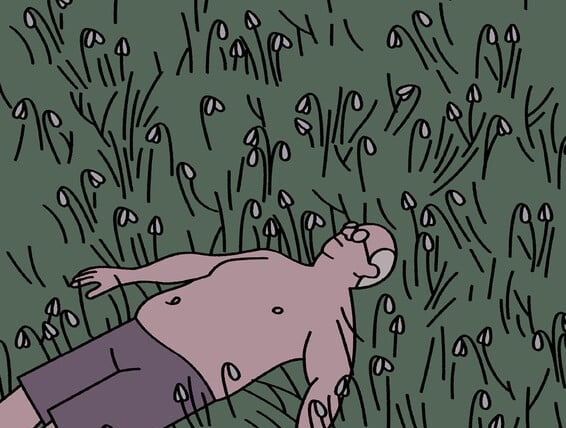
An animated short: a man's ever-growing list of everything he'll finally do once he retires, and what that list quietly reveals about the life he is living now.
An animated short: a man's ever-growing list of everything he'll finally do once he retires, and what that list quietly reveals about the life he is living now.
Archive ·
Skyscrapers to scale
A to-scale diagram comparing skyscraper heights, from SkyscraperPage.
A to-scale diagram comparing skyscraper heights, from SkyscraperPage.
Nothing here yet.